He is a terminalist. I know a LOT of people fall into the error of seeing Ockham as a nominalist...but it is impossible when one looks at his writings.
A nominalist is someone who sees a lack of universals, that it is not objective forms that give things their nature, but the words that we give them. So, a nominalist would say that when they see what most of us know of as a book, the meaning of what a book is is up to what he decides to call it. It's the word that gives meaning, it has nothing to do with the reality of the thing itself.
So, in order to over this quickly, I will give a very quick crash course in Ockham's thought.
Ockham believes in the existence of terms and believes they correspond to reality. I will start from the lower and go up to the higher level, as he has a definite hierarchy of terms.
The lowest is written terms. Written terms signify (they point one towards) spoken terms. Spoken terms signify mental terms. Now this is where people think that Ockham stops. That it is mental terms that give meaning to everything. But in fact there is one more level of terms...the term itself, that is, the idea of what the thing is. This is what is not expressible in any sort of language, whether it be written, verbal, or mental, it is pure idea. It is this idea that corresponds to reality. Thus the term as such gets its meaning only from the thing to which it corresponds to. Thus the term of what a book is, the idea of what a book is to use a different word, is only meaningful because there are actual books out in the world to correspond to. Thus there is a meaning in his language.
And multiple objects can participate (to use a platonic word) in the common idea of book. There are objective universals out there in which one can get the idea of book as the particular idea of a specific book, for example, signifies the universal idea of book, it points towards that universal idea of the book. It, in a certain sense, corresponds to that objective reality.
Any comments on this? Am I clear?
-Harrison
Tuesday, October 24, 2006


Thursday, October 12, 2006
LibraryThing
I couldn't help it! I had to get on this thing! Needless to say it is a great way of keeping track of one's books. I've got 2 shelves of books on there already, only 13 to go. I'm especially fond of the tagging feature. It has gotten me very excited about my book collection and helping me see what I have on my bookshelf that I have forgotten about.
Here's my profile...if you have it let me know and I'll add you to my list on librarything and check out your library.
http://www.librarything.com/catalog.php?view=lindyholic
I should be posting a bit more as time goes on now...life SEEMS to be slowing down. I'm hoping to post, either tomorrow or on Saturday, a post on why Ockham is not a nominalist.
Harrison
Here's my profile...if you have it let me know and I'll add you to my list on librarything and check out your library.
http://www.librarything.com/catalog.php?view=lindyholic
I should be posting a bit more as time goes on now...life SEEMS to be slowing down. I'm hoping to post, either tomorrow or on Saturday, a post on why Ockham is not a nominalist.
Harrison
Thursday, October 05, 2006
The Intellectual Movement
I've been inspired by the words of the Pope's talk at Ragensburg. And it made me think of to where we see the greatest intellectual movements in the history of man. And sure enough, they all fall within 3 great periods. The following is from an e-mail I sent to a friend...May we all embrace Faith and Reason.
When one looks back at history, one sees the greatest achievements in history in times in which Faith and Reason are embrassed in their fullest. It is interesting to note to that the great cultural movements of Western History are all surrounded with the creation of schools.
The first period is the Patristic Period...in which the great Fathers of the Church defended the True Faith not using just Faith (as many of our Protestant brothers and sisters think) but with Reason. The greatest, of course, is St Augustine who states that belief is what gives rise to a proper use of reason. As St Anselm, in the later Middle Ages states "I believe so that I may understand". Faith is, of course, first, but faith is NOT irrational, but is in fact purely rational...for the Divine Logos, the Word, the Divine Reason, Christ, came down to Earth and took on human flesh. It is in the Incarnation that Reason and Faith come together...for before Christ, we see great thinkers like Plato and Aristotle who attained great truths with the use of reason, but were not able to come to THE TRUTH without the aid of faith. Now, it is easy to note that there were no "schools" during the Patristic period...things were still too scattered, but there were great centers of thought, especially in the East. The school was in the Church, in which the great homilies were given by the greatest of Saints. It is no surprise that St Augustine is ALWAYS studied as one of the greatest minds of history. St John Chrysostom, the Golden Mouth, taught people in the setting of the Church and through his writings as well...it was not in a formalized school, but the Church existed to educate those in the faith they accepted.
The next period is the 9th century Renaissance which, in my humble opinion, begins on Christmas Night in the year 800 in which Charlemagne, Charles the Great, or, as I lovingly call him "Chuck" was crowned by the Pope as the Holy Roman Empire. This was the light that the West needed. There was no such thing as a "dark ages", for that implies a total lack of advancement. Indeed, the period between 500 and 800 AD had less achievements, but that was due to the isolation of towns. There were still great thinkers like Boethius and Pseudo-Dionysius who had a great impact on thought in the Western Tradition, but I am getting off my topic here....
Chuck saw a problem. He saw lack of education in the clergy, he saw a lack of use of the gift of reason in the people in general in fact. It is thanks to Chuck that the idea of a formalized schooling system first comes into place. Chuck is responsible for the creation of the Liberal Arts...the study of Mathematics, Philosophy, Geometry and so forth, in which the Liberal Arts came under 2 titles, the Quadrivium and the Trivium (4 and 3 respectively). In order for the proper training of the priests, Chuck created the ideas of Cathedral Schools, the first VERY formal schooling system (though it MAY be possible to prove me wrong on that, but I argue for it). It is thank to him that we have Capital and minuscule letters in our alphabet and spacing in order to have a better flow on our page...there were numerous other advances as well, including an embracing of Classical thought and a re-immergance of the copying of scripts, to which we can thank for many of the books we have in our possession nowadays.
The next period is the 12th Century Renaissance, and guess which intellectual institution takes its rise from this great cultural advancement? The University. THe ideas of Law (to which the University of Bologna was so popular for), the philosophical and theological and many other traditions have their roots in the University. In fact, it's because our legal system has lost its roots in the Western idea of law (to which BXVI has been warning us so drastically about, the distancing ourselves from our Western roots) that our legal system is now in trouble, because it is so far beyond its original purpose.
The ideas about just wages, fair trade, and many other ideas we take for granted all have their roots in the 12th Century Renaissance, to which was all formed in the, you guessed it, the intellectual sphere of the University. It is there that ideas were formed and molded and put into practice. The thinkers formed the ideas for the way to live life for everyone. And this was all done in the name of truth.
In fact, the greatest common thing between these 3 periods is the fact that there was one common purpose: To discover the Truth in all things, because God who is the Logos, the Divine Reason, came into the world, and so, necessarily, there is a reason to everything in the world. By faith in the Logos, we use our reason to come to the great truths of everything.
I argue to that our society has yet to see such a remarkable and exciting time as those 3 periods. We can reach it again, if we listen to the cry of Pope Benedict, and unite ourselves in our true Western Roots, which is the Divine Logos, and thus would be able to pursue, once again, reason through the guidance of faith in the Truth, which is Christ and His Church.
-Harrison
When one looks back at history, one sees the greatest achievements in history in times in which Faith and Reason are embrassed in their fullest. It is interesting to note to that the great cultural movements of Western History are all surrounded with the creation of schools.
The first period is the Patristic Period...in which the great Fathers of the Church defended the True Faith not using just Faith (as many of our Protestant brothers and sisters think) but with Reason. The greatest, of course, is St Augustine who states that belief is what gives rise to a proper use of reason. As St Anselm, in the later Middle Ages states "I believe so that I may understand". Faith is, of course, first, but faith is NOT irrational, but is in fact purely rational...for the Divine Logos, the Word, the Divine Reason, Christ, came down to Earth and took on human flesh. It is in the Incarnation that Reason and Faith come together...for before Christ, we see great thinkers like Plato and Aristotle who attained great truths with the use of reason, but were not able to come to THE TRUTH without the aid of faith. Now, it is easy to note that there were no "schools" during the Patristic period...things were still too scattered, but there were great centers of thought, especially in the East. The school was in the Church, in which the great homilies were given by the greatest of Saints. It is no surprise that St Augustine is ALWAYS studied as one of the greatest minds of history. St John Chrysostom, the Golden Mouth, taught people in the setting of the Church and through his writings as well...it was not in a formalized school, but the Church existed to educate those in the faith they accepted.
The next period is the 9th century Renaissance which, in my humble opinion, begins on Christmas Night in the year 800 in which Charlemagne, Charles the Great, or, as I lovingly call him "Chuck" was crowned by the Pope as the Holy Roman Empire. This was the light that the West needed. There was no such thing as a "dark ages", for that implies a total lack of advancement. Indeed, the period between 500 and 800 AD had less achievements, but that was due to the isolation of towns. There were still great thinkers like Boethius and Pseudo-Dionysius who had a great impact on thought in the Western Tradition, but I am getting off my topic here....
Chuck saw a problem. He saw lack of education in the clergy, he saw a lack of use of the gift of reason in the people in general in fact. It is thanks to Chuck that the idea of a formalized schooling system first comes into place. Chuck is responsible for the creation of the Liberal Arts...the study of Mathematics, Philosophy, Geometry and so forth, in which the Liberal Arts came under 2 titles, the Quadrivium and the Trivium (4 and 3 respectively). In order for the proper training of the priests, Chuck created the ideas of Cathedral Schools, the first VERY formal schooling system (though it MAY be possible to prove me wrong on that, but I argue for it). It is thank to him that we have Capital and minuscule letters in our alphabet and spacing in order to have a better flow on our page...there were numerous other advances as well, including an embracing of Classical thought and a re-immergance of the copying of scripts, to which we can thank for many of the books we have in our possession nowadays.
The next period is the 12th Century Renaissance, and guess which intellectual institution takes its rise from this great cultural advancement? The University. THe ideas of Law (to which the University of Bologna was so popular for), the philosophical and theological and many other traditions have their roots in the University. In fact, it's because our legal system has lost its roots in the Western idea of law (to which BXVI has been warning us so drastically about, the distancing ourselves from our Western roots) that our legal system is now in trouble, because it is so far beyond its original purpose.
The ideas about just wages, fair trade, and many other ideas we take for granted all have their roots in the 12th Century Renaissance, to which was all formed in the, you guessed it, the intellectual sphere of the University. It is there that ideas were formed and molded and put into practice. The thinkers formed the ideas for the way to live life for everyone. And this was all done in the name of truth.
In fact, the greatest common thing between these 3 periods is the fact that there was one common purpose: To discover the Truth in all things, because God who is the Logos, the Divine Reason, came into the world, and so, necessarily, there is a reason to everything in the world. By faith in the Logos, we use our reason to come to the great truths of everything.
I argue to that our society has yet to see such a remarkable and exciting time as those 3 periods. We can reach it again, if we listen to the cry of Pope Benedict, and unite ourselves in our true Western Roots, which is the Divine Logos, and thus would be able to pursue, once again, reason through the guidance of faith in the Truth, which is Christ and His Church.
-Harrison
Monday, October 02, 2006
I've been Tagged
I have been tagged to do this, so here I go...
"If an angel could take me back in time, what five things or occasions would I like to experience?"
5 - To be in the same room as St Augustine as he wrote his Confessions
4 - To be at a class at the University of Paris in the 12th century
3 - To have been able to hear the preaching of St Francis
2 - To have a theological discussion with Bl. John Duns Scotus
1 - To be present for the Crucifixion and Resurrection of Christ (you can't have one without the other)
I can't really tag anyone because I don't know who else who has a blog who reads this.....
-Harrison
"If an angel could take me back in time, what five things or occasions would I like to experience?"
5 - To be in the same room as St Augustine as he wrote his Confessions
4 - To be at a class at the University of Paris in the 12th century
3 - To have been able to hear the preaching of St Francis
2 - To have a theological discussion with Bl. John Duns Scotus
1 - To be present for the Crucifixion and Resurrection of Christ (you can't have one without the other)
I can't really tag anyone because I don't know who else who has a blog who reads this.....
-Harrison
Saturday, September 30, 2006
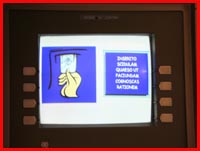
Latin ATMs
Yes...an ATM that's in Latin...
Since the Church's official language is Latin, guess what language their ATM's are?
http://www.cardinalseansblog.org/wp-content/uploads/2006/09/atm-in-latin.jpg
This is courtesy of Cardinal Sean's blog...a great blog worthy to check out.
-Harrison
Since the Church's official language is Latin, guess what language their ATM's are?
http://www.cardinalseansblog.org/wp-content/uploads/2006/09/atm-in-latin.jpg
This is courtesy of Cardinal Sean's blog...a great blog worthy to check out.
-Harrison
Tuesday, September 26, 2006
Discovering the Catholic Way of Life Wrap Up
So, the weekend is now over, and though I'm exhausted, I can't seem to be able to sleep at the moment, so this is a good time to give everyone a wrap up of the weekend's events.
Being a Director of The Edith Stein Society (www.edithsteinsociety.ca), I was quite involved in the weekend.
Friday began with dinner with George at Moxie's with some of the other directors. The dinner was good, though we were a bit quiet...I'm just trying to get used to figure out how to talk to people I don't know...definitely something to grow in :).
After dinner we went for a bit of a walk around the block at which point we made our way to the Conservatory of Music. Sat around, met up with people, and then the conference began with what it means to be a Church.
By far this was my favourite talk of the evening, in that there were 2 important keys to take away, that the Church is a communion and that it is firstly formed in the image of Mary. Amazing stuff and just awesome. We had question and answers and then that was it.
After such an awesome first session we went out to Boston Pizza which didn't work out as much as I was hoping. People still seemed to enjoy themselves, but I was hoping (and so was George after talking to him) that there would have been a bit more of an intimate atmosphere. In the future, I will hold it at the Parish Center.
I drove George back to the Hotel, had an awesome chat with him, and then went back to Boston Pizza for more hanging out, and that was Friday night.
Saturday started off with Mass and then it was the Conference again. Again, awesome stuff. George discussed the Moral Life and the Laws that Liberate. The big thing to take away again was "Morality is where God's will meets the man's will and man's will meets God's will."
It was then off to lunch which involved myself, Annette, and her cousin running around doing some final erands for the conference.
The afternoon was the role of the Church in forming society through Democracy and promoting the culture of life. I know this is George's big thing and that was very engaging as some of it was very new to me and I quite enjoyed it.
And then the conference ended and I've gotten nothing but AMAZING feedback and thank yous and thank you cards for the members of the society. All in all an awesome conference.
Saturday night involved going out for dinner in style with George. And when I say in style, I really mean it. It's one of those restaurants where your meal is small but REALLY expensive. The food was delicious, I just wish there was more...when I hear "4 oz. of prime ribs" on the menu I freak out ;).
Discussions were great and I know Georege really enjoyed the dinner as well.
I got some exciting news that evening as well.
So we were all talking at the table and very much enjoying ourselves. And I was talking for a minute and then, out of nowhere, George says "Harrison, you should come to my course in the summer"(I hope I remembered that correctly)....
I wanted to fall off my chair. Literally...I couldn't believe the words I was hearing!!
He gave me his card to e-mail him and talk to him some more about it and told me he's been very much trying to get a Canadian to go and he would very much like to see me go.
I was so joyous that evening that I could barely fall asleep. There are many MANY more people who are much more deserving then I could possibly be, and yet he asked me....I am overjoyed to say the least.
The course is the Tertio Millennio Seminar in Krakow, Poland. It's a 3 week intensive study of Catholic Social Doctrine, Catholic Culture, and, to quote George, "a lot of beer". All I have to do is pay for the flight to Poland that the Tertio Millennio Institute takes care of the rest!!! It just so happens that I have 3 weeks of holidays at work too! God is just so good.
So I was FINALLY leaving at 10:30 to drive Fr. John and Sr. Jo home (hence why I never made it to the Irish TImes Kristina, but we'll have to hang out in November when I'm at the Abbey some time that week) and as I was saying buy to George he said "we'll see you in Poland"...God is really just so good :).
I also got him to sign 3 of my books :).
So that was the weekend, a huge success...
For those who are interested in future TESS events, we'll be having a form very soon on our website so that people can sign up for an e-mail list to be kept up to date with our upcoming events.
-Harrison
Being a Director of The Edith Stein Society (www.edithsteinsociety.ca), I was quite involved in the weekend.
Friday began with dinner with George at Moxie's with some of the other directors. The dinner was good, though we were a bit quiet...I'm just trying to get used to figure out how to talk to people I don't know...definitely something to grow in :).
After dinner we went for a bit of a walk around the block at which point we made our way to the Conservatory of Music. Sat around, met up with people, and then the conference began with what it means to be a Church.
By far this was my favourite talk of the evening, in that there were 2 important keys to take away, that the Church is a communion and that it is firstly formed in the image of Mary. Amazing stuff and just awesome. We had question and answers and then that was it.
After such an awesome first session we went out to Boston Pizza which didn't work out as much as I was hoping. People still seemed to enjoy themselves, but I was hoping (and so was George after talking to him) that there would have been a bit more of an intimate atmosphere. In the future, I will hold it at the Parish Center.
I drove George back to the Hotel, had an awesome chat with him, and then went back to Boston Pizza for more hanging out, and that was Friday night.
Saturday started off with Mass and then it was the Conference again. Again, awesome stuff. George discussed the Moral Life and the Laws that Liberate. The big thing to take away again was "Morality is where God's will meets the man's will and man's will meets God's will."
It was then off to lunch which involved myself, Annette, and her cousin running around doing some final erands for the conference.
The afternoon was the role of the Church in forming society through Democracy and promoting the culture of life. I know this is George's big thing and that was very engaging as some of it was very new to me and I quite enjoyed it.
And then the conference ended and I've gotten nothing but AMAZING feedback and thank yous and thank you cards for the members of the society. All in all an awesome conference.
Saturday night involved going out for dinner in style with George. And when I say in style, I really mean it. It's one of those restaurants where your meal is small but REALLY expensive. The food was delicious, I just wish there was more...when I hear "4 oz. of prime ribs" on the menu I freak out ;).
Discussions were great and I know Georege really enjoyed the dinner as well.
I got some exciting news that evening as well.
So we were all talking at the table and very much enjoying ourselves. And I was talking for a minute and then, out of nowhere, George says "Harrison, you should come to my course in the summer"(I hope I remembered that correctly)....
I wanted to fall off my chair. Literally...I couldn't believe the words I was hearing!!
He gave me his card to e-mail him and talk to him some more about it and told me he's been very much trying to get a Canadian to go and he would very much like to see me go.
I was so joyous that evening that I could barely fall asleep. There are many MANY more people who are much more deserving then I could possibly be, and yet he asked me....I am overjoyed to say the least.
The course is the Tertio Millennio Seminar in Krakow, Poland. It's a 3 week intensive study of Catholic Social Doctrine, Catholic Culture, and, to quote George, "a lot of beer". All I have to do is pay for the flight to Poland that the Tertio Millennio Institute takes care of the rest!!! It just so happens that I have 3 weeks of holidays at work too! God is just so good.
So I was FINALLY leaving at 10:30 to drive Fr. John and Sr. Jo home (hence why I never made it to the Irish TImes Kristina, but we'll have to hang out in November when I'm at the Abbey some time that week) and as I was saying buy to George he said "we'll see you in Poland"...God is really just so good :).
I also got him to sign 3 of my books :).
So that was the weekend, a huge success...
For those who are interested in future TESS events, we'll be having a form very soon on our website so that people can sign up for an e-mail list to be kept up to date with our upcoming events.
-Harrison
Thursday, September 21, 2006
Wow
In the blogging world, you can't get much better then this for advertising for your society!
http://amywelborn.typepad.com/openbook/2006/09/from_the_emailb.html
-Harrison
http://amywelborn.typepad.com/openbook/2006/09/from_the_emailb.html
-Harrison
Questions for George Weigel!
I just thought of something...if you have questions for George Weigel, post them on the blog and I'll attempt to ask him them over the weekend and post the responses....you'll get your George Weigel exclusive!!!
There'll be some other bloggers out here this weekend so stay tuned to Western Catholic Blogs to get your review of the weekend.
It's going to be awesome!!!
-Harrison
There'll be some other bloggers out here this weekend so stay tuned to Western Catholic Blogs to get your review of the weekend.
It's going to be awesome!!!
-Harrison
Sunday, August 27, 2006
Relationship?
One thing I've reflected on the past is the use of the term "relationship" with regards to how we relate to God.
Don't get me wrong, I am not denying our relationship with God with what I am about to say, only that what we have with Him goes far beyond the idea of relationship. It includes it, but goes beyond it. Let me explain.
I am going to look at this as a hierarchy, one in which the higher involve the lower.
The lowest in the hierarchy is the idea of a simple relationship. It is a truth that we do have a relationship, but it's not the be all and all, it does not connote the reality that we live. To have a relationship with Christ only expresses love in the way of philia, in the familial type of love. We see Christ simply as a member of the family and thus have a natural affection of love towards Him. This is indeed the case, but it is not the fullness.
The next is an intimate relationship with Christ. This goes up a notch. Not only does this include everything from pure relationship, but it adds the idea of yearning. We experience Christ intimately and thus move closer towards Him and yearn for Him. This is the relationship of eros, of yearning and wanting. We see that Christ can give us truth, beauty, and happiness, and we want to accept that and ask it of Him. For the first time, we seek Christ out as the woman seesk out her love in the Song of Songs. We know that we have experienced true love, and we want more of it. But this also is not the fulfillment.
I would like to argue that we have an intimate communion with God. It involves the first two things which I already mentioned, but it is no longer a seeking, but a willing to give our entire seslves over to Christ and to conform ourselves to His will. We are no longer self-seeking, but are seeking that which pleases our beloved. Communion entails agape love, that is, love that is totally self-giving. In other words, an intimate communion with Christ is an involvement in the Trinitarian exchange of love. By giving our selves completely to Christ, we thus image the exchange of self-giving love that is a reality in the Blessed Trinity. And what is the Trinity? It is a communion of love, the most intimate. There is relationship there, and there is seeking, but it is realized fully in the self-giving of self. Eros and philia realize their true nature in the self-giving love of the Trinity.
And thus, by our giving of self to Christ, we experience that Trinitarian exchange of love in its fullness. It is something that is worked at throughout our lives as we grow closer to Christ. But Christ already gives us that foretaste through the Eucharist.
When Christ says in John 6 that "unless you eat the flesh of the Son of Man and drink His blood, you have no life in you" He means it! By receiving the Eucharist, we receive that spiritual food that gives us the strength to love Christ as He loves us. What is our life? To grow in Holiness by imitating Christ? How do we imitate Christ? By being a sign of love to the world. Thus, by receiving the Eucharist, we receive the love of Christ which is the heart of our life. Without Christ's love, communicated to us through the Eucharist, indeed, we have no life, because we do not find the fulfillment of the desires of our heart in things of the world, but only in the love of Christ. But we only experience the love of Christ through the reception of Him in our lives. We receive Him in Baptism when we enter the Church, but we receive Him intimately in the Eucharist. Christ gives Hiimself to us, who are we to refuse His gift?
*sidenote* I realize that I had a post on personal and intimate relationship of Chirst, but when one prays and ponders thelogical things, one can move further on and beyond.
-Harrison
Don't get me wrong, I am not denying our relationship with God with what I am about to say, only that what we have with Him goes far beyond the idea of relationship. It includes it, but goes beyond it. Let me explain.
I am going to look at this as a hierarchy, one in which the higher involve the lower.
The lowest in the hierarchy is the idea of a simple relationship. It is a truth that we do have a relationship, but it's not the be all and all, it does not connote the reality that we live. To have a relationship with Christ only expresses love in the way of philia, in the familial type of love. We see Christ simply as a member of the family and thus have a natural affection of love towards Him. This is indeed the case, but it is not the fullness.
The next is an intimate relationship with Christ. This goes up a notch. Not only does this include everything from pure relationship, but it adds the idea of yearning. We experience Christ intimately and thus move closer towards Him and yearn for Him. This is the relationship of eros, of yearning and wanting. We see that Christ can give us truth, beauty, and happiness, and we want to accept that and ask it of Him. For the first time, we seek Christ out as the woman seesk out her love in the Song of Songs. We know that we have experienced true love, and we want more of it. But this also is not the fulfillment.
I would like to argue that we have an intimate communion with God. It involves the first two things which I already mentioned, but it is no longer a seeking, but a willing to give our entire seslves over to Christ and to conform ourselves to His will. We are no longer self-seeking, but are seeking that which pleases our beloved. Communion entails agape love, that is, love that is totally self-giving. In other words, an intimate communion with Christ is an involvement in the Trinitarian exchange of love. By giving our selves completely to Christ, we thus image the exchange of self-giving love that is a reality in the Blessed Trinity. And what is the Trinity? It is a communion of love, the most intimate. There is relationship there, and there is seeking, but it is realized fully in the self-giving of self. Eros and philia realize their true nature in the self-giving love of the Trinity.
And thus, by our giving of self to Christ, we experience that Trinitarian exchange of love in its fullness. It is something that is worked at throughout our lives as we grow closer to Christ. But Christ already gives us that foretaste through the Eucharist.
When Christ says in John 6 that "unless you eat the flesh of the Son of Man and drink His blood, you have no life in you" He means it! By receiving the Eucharist, we receive that spiritual food that gives us the strength to love Christ as He loves us. What is our life? To grow in Holiness by imitating Christ? How do we imitate Christ? By being a sign of love to the world. Thus, by receiving the Eucharist, we receive the love of Christ which is the heart of our life. Without Christ's love, communicated to us through the Eucharist, indeed, we have no life, because we do not find the fulfillment of the desires of our heart in things of the world, but only in the love of Christ. But we only experience the love of Christ through the reception of Him in our lives. We receive Him in Baptism when we enter the Church, but we receive Him intimately in the Eucharist. Christ gives Hiimself to us, who are we to refuse His gift?
*sidenote* I realize that I had a post on personal and intimate relationship of Chirst, but when one prays and ponders thelogical things, one can move further on and beyond.
-Harrison
Tuesday, August 15, 2006
The Role of Music in Liturgy
It's been a while, but I've got too much to say, so I figured I ought to post something :).
It's about the role of music in the liturgy. It's been the fruit of discussion I've been having with many people for the past few days and so I figure I'd share it with you all, plus dilixitprior's post on George Weigel's article inspired me to finally post something.
As we all know, there is some...well....junky music out there for liturgy. Now, let me say this first, and I very much want to qualify this, that other forms of music are not bad or anything, and they can indeed be Christianized and have been in many ways, but they don't have a role in liturgical celebration. Sing praise and worship, but I find it's role in liturgy to not be fitting (I will explain this later).
So, I argue that the music we ought to sing at Mass is in accordance to that which has been part of the constant tradition of the Church. There are 2 streams of tradition in the Church with regards to music, the Eastern stream and the Western stream.
In the history of the existence of the Church, the Eastern Church's roots are probably the most visible. It's roots are the longest lasting and perhaps even the least changing from my bits and pieces of knowledge about the history of liturgical music.
The Western Church, to my knowledge (and am willing to be corrected), did not have any real musical tradition until the entrance of Gregorian Chant. It is Gregorian Chant that is the finalization of the tradition of music for Western Liturgies.
Now, people argue that the Mass has been changed in order to bring us into a more modern period. This is true, there is less or no Latin (which is fine) in order to adapt to the fact that Latin is not as accessible for people to learn as it once was as well as other changes. Some are unfortunate and will be changing to a more legitimate translation with the new Roman Missal that is due out soon. Others are accidental and will probably not change because they are not of a huge theological concern. One of these is the facing East for Mass. This has changed universally pretty much, but Ratzinger, before he was Pope, said that though this is unfortunate because of the reasons, it is such a major change that it is not something that is essential to the liturgy (he says this in Feast of Faith and Spirit of the Liturgy).
So, people argue, because the Mass has changed to bring the Church into the Modern era to make it a better tool of evangelization to the modern man, so too ought the music to change.
I argue differently, however. Yes, there has been changes in order to make the Church accessible to the modern person. The music is something that ought not to change. The reason for this is the constant tradition of the Church. As we can see, the Mass has changed throughout the history of the Church, yet it's essence has always remained. With these changes in the Mass, however, there have not been much if any, at least up until these more current days, change in the music. The church's tradition is firmly rooted in music that leads one's focus onto God.
Many people feel music that is more rock orientated and more uplifting and feel good ought to be the main course of music for mass. Chant is old school and went out with the old mass. I disagree.
The mass is not there to be noisy, it is there for silence. It is there for us to bring praise to God, to truly worship Him. This is why we were created, so that we may worship Him out of love for the love He has shown us. So, though rock orientated music (I use this only as one example) is not meant for Mass.
Now, people would immediately interject "But one of the great things the Church does is that it takes what is good from non-Christian art forms and worship and incorporate it into the life of the Church, why can we not contain praise and worship music in liturgy using this reason?"
I answer that indeed praise and worship music is good and is a sincere way of praising God, but not in liturgy. The liturgy is a community event in that we are there to grow closer to God, and, through that growing closer to God, growing closer to our neighbour. We indeed do have many ways of praising and glorifying God, but the Mass is wholy seperated from individualism but is built upon the idea of building community. And that community is not just parish based but is indeed a universal community, a communion of Saints! And so, our praise ought to be unified in a manner that leads one to silence so as to properly focus on the praising and worshiping of God.
This is why I argue in favour of the music that is more rooted in the tradition of the Church. It is something that wistands the test of time, that is always there. It leads you to a silence while singing. When I hear Gregorian Chant (I only use it as just one example) it leads me to silence and thus to a greater love fo the communial embrace God and I are having. When there is more noisy music, it is very much harder to express that silence that we yearn for because one begins to be entertained. It becomes about the parishioner and not God.
I remember on Holy Thursday this past year, our Bishop was processing through the Cathedral with the Eucharist one final time before Christ went into the tomb before His resurrection. The chant the whole time was the Pange Lingua. How beautiful it was! There was such unison and peace, there was singing, but there was silence, the great paradox of music realizing it's function in liturgy.
Now, I'm not saying all the music has to be in Latin, but it has to have the heart of the role of music in liturgy. Ratzinger and many other theologians have said this as well.
St Augustine once said that "singing is praying twice". He is right indeed, because there is the outward praise one has towards God, but there is also the interior silence, which the Catechism calls "the language of God."
One final note for now. The Mass is, as Vatican II said, ought to be accessible to all people. But it never asked for us to remove the mystery of what is happening at Mass. Singing music that focuses on emotional highs is not conducive to this spirit, it does not lead one to a sense of mystery, but to a sense of entertainment, into getting caught up into emotions, there is little room for silence.
And so, if the Mass is also to connote a sense of mystery, we ought to have music and a language that expresses this. This is why music such as Gregorian Chant is great, it leads one to the sense of mystery, the "I see the beauty in all it's uncomprehensability". There is a role a language as well, but that's another post.
Again, I am not dealing with just Gregorian Chant or Praise and Worship here, I only use them as examples because they are the two most common ones I could think of.
This is just the tip of the ice berg, but my initial thoughts on the role of music in Liturgy.
-Harrison
It's about the role of music in the liturgy. It's been the fruit of discussion I've been having with many people for the past few days and so I figure I'd share it with you all, plus dilixitprior's post on George Weigel's article inspired me to finally post something.
As we all know, there is some...well....junky music out there for liturgy. Now, let me say this first, and I very much want to qualify this, that other forms of music are not bad or anything, and they can indeed be Christianized and have been in many ways, but they don't have a role in liturgical celebration. Sing praise and worship, but I find it's role in liturgy to not be fitting (I will explain this later).
So, I argue that the music we ought to sing at Mass is in accordance to that which has been part of the constant tradition of the Church. There are 2 streams of tradition in the Church with regards to music, the Eastern stream and the Western stream.
In the history of the existence of the Church, the Eastern Church's roots are probably the most visible. It's roots are the longest lasting and perhaps even the least changing from my bits and pieces of knowledge about the history of liturgical music.
The Western Church, to my knowledge (and am willing to be corrected), did not have any real musical tradition until the entrance of Gregorian Chant. It is Gregorian Chant that is the finalization of the tradition of music for Western Liturgies.
Now, people argue that the Mass has been changed in order to bring us into a more modern period. This is true, there is less or no Latin (which is fine) in order to adapt to the fact that Latin is not as accessible for people to learn as it once was as well as other changes. Some are unfortunate and will be changing to a more legitimate translation with the new Roman Missal that is due out soon. Others are accidental and will probably not change because they are not of a huge theological concern. One of these is the facing East for Mass. This has changed universally pretty much, but Ratzinger, before he was Pope, said that though this is unfortunate because of the reasons, it is such a major change that it is not something that is essential to the liturgy (he says this in Feast of Faith and Spirit of the Liturgy).
So, people argue, because the Mass has changed to bring the Church into the Modern era to make it a better tool of evangelization to the modern man, so too ought the music to change.
I argue differently, however. Yes, there has been changes in order to make the Church accessible to the modern person. The music is something that ought not to change. The reason for this is the constant tradition of the Church. As we can see, the Mass has changed throughout the history of the Church, yet it's essence has always remained. With these changes in the Mass, however, there have not been much if any, at least up until these more current days, change in the music. The church's tradition is firmly rooted in music that leads one's focus onto God.
Many people feel music that is more rock orientated and more uplifting and feel good ought to be the main course of music for mass. Chant is old school and went out with the old mass. I disagree.
The mass is not there to be noisy, it is there for silence. It is there for us to bring praise to God, to truly worship Him. This is why we were created, so that we may worship Him out of love for the love He has shown us. So, though rock orientated music (I use this only as one example) is not meant for Mass.
Now, people would immediately interject "But one of the great things the Church does is that it takes what is good from non-Christian art forms and worship and incorporate it into the life of the Church, why can we not contain praise and worship music in liturgy using this reason?"
I answer that indeed praise and worship music is good and is a sincere way of praising God, but not in liturgy. The liturgy is a community event in that we are there to grow closer to God, and, through that growing closer to God, growing closer to our neighbour. We indeed do have many ways of praising and glorifying God, but the Mass is wholy seperated from individualism but is built upon the idea of building community. And that community is not just parish based but is indeed a universal community, a communion of Saints! And so, our praise ought to be unified in a manner that leads one to silence so as to properly focus on the praising and worshiping of God.
This is why I argue in favour of the music that is more rooted in the tradition of the Church. It is something that wistands the test of time, that is always there. It leads you to a silence while singing. When I hear Gregorian Chant (I only use it as just one example) it leads me to silence and thus to a greater love fo the communial embrace God and I are having. When there is more noisy music, it is very much harder to express that silence that we yearn for because one begins to be entertained. It becomes about the parishioner and not God.
I remember on Holy Thursday this past year, our Bishop was processing through the Cathedral with the Eucharist one final time before Christ went into the tomb before His resurrection. The chant the whole time was the Pange Lingua. How beautiful it was! There was such unison and peace, there was singing, but there was silence, the great paradox of music realizing it's function in liturgy.
Now, I'm not saying all the music has to be in Latin, but it has to have the heart of the role of music in liturgy. Ratzinger and many other theologians have said this as well.
St Augustine once said that "singing is praying twice". He is right indeed, because there is the outward praise one has towards God, but there is also the interior silence, which the Catechism calls "the language of God."
One final note for now. The Mass is, as Vatican II said, ought to be accessible to all people. But it never asked for us to remove the mystery of what is happening at Mass. Singing music that focuses on emotional highs is not conducive to this spirit, it does not lead one to a sense of mystery, but to a sense of entertainment, into getting caught up into emotions, there is little room for silence.
And so, if the Mass is also to connote a sense of mystery, we ought to have music and a language that expresses this. This is why music such as Gregorian Chant is great, it leads one to the sense of mystery, the "I see the beauty in all it's uncomprehensability". There is a role a language as well, but that's another post.
Again, I am not dealing with just Gregorian Chant or Praise and Worship here, I only use them as examples because they are the two most common ones I could think of.
This is just the tip of the ice berg, but my initial thoughts on the role of music in Liturgy.
-Harrison
Subscribe to:
Posts (Atom)