Have a Happy Easter Everyone. I think I am going to be sheep like and do what many other bloggers are doing for Easter...not blogging. It's the beginning of the Easter Triduum, so much time ought to be devoted to prayer and such, and all the going to Church too :). I love this time of the year. That and my parents are coming over to Victoria for a couple of days, which will be nice.
Oh, and some news. Though it's not the full time work, I did get a part time job that I had been planning on taking on top of my full time job. I'm now the new Sacristan for the Cathedral here in Victoria. It means I'll probably be working 7 days a week, but it also means working at the Cathedral a bit, so I'm quite excited.
Again, have a Happy and Blessed Easter everyone.
-Harrison
Thursday, April 13, 2006


Deus Caritas Est - Christian and Ecclesial Charity
The Pope has much to say in regards to this, and I will simply sum it up for the sake of time, and would encourage you again to read his entire encyclical to get to the depths of what he is attempting to teach us. Christian and ecclesial charity involve the supporting of material needs to those who are in need to living a dignified human life, such as feeding the hungry and clothing the poor. The next point is that our charitable activities are to be independent of parties and ideologies, because they cannot express the fullness of truth and justice, only Christ can do that.
Our charitable activity is to be done in the light of Christ only. Our love must not be a forceful imposition of God to the world. We must not proselytize the Gospel, because it is not something that can be forced, it must be experienced and affirmed through the yes of faith.
Understanding the basics behind Christian charity, we must now understand what is needed in order to be formed so that we can properly enact charity in the world. The Pope said that in order to carry out the charitable activities of the Church, we must first and foremost contemplate the love of Christ through prayer. We must spend much time in prayer, and fast and do penance for the spiritually poor. He emphasizes the need to serve all poor, and this includes the spiritually poor. By contemplating the life of Christ through the reading of scripture, through the rosary, through the reception of the Sacraments, and through simple contemplation in His presence in adoration, we are able to receive the graces necessary to fulfill the will of God in the charitable activities we do. Before his conclusion, Pope Benedict states that “Love is possible, and we are able to practice it because we are created in the image of God. To experience love and in this way to cause the light of God to enter into the world – this is the invitation I would like to extend to you with the present encyclical.” He then ends the encyclical by giving us examples of various Saints who enacted the love of God to others in their lives, such as our Martin of Tours, Blessed Mother Teresa, and our Holy Mother Mary, who gave herself completely over to God.
THE END
Our charitable activity is to be done in the light of Christ only. Our love must not be a forceful imposition of God to the world. We must not proselytize the Gospel, because it is not something that can be forced, it must be experienced and affirmed through the yes of faith.
Understanding the basics behind Christian charity, we must now understand what is needed in order to be formed so that we can properly enact charity in the world. The Pope said that in order to carry out the charitable activities of the Church, we must first and foremost contemplate the love of Christ through prayer. We must spend much time in prayer, and fast and do penance for the spiritually poor. He emphasizes the need to serve all poor, and this includes the spiritually poor. By contemplating the life of Christ through the reading of scripture, through the rosary, through the reception of the Sacraments, and through simple contemplation in His presence in adoration, we are able to receive the graces necessary to fulfill the will of God in the charitable activities we do. Before his conclusion, Pope Benedict states that “Love is possible, and we are able to practice it because we are created in the image of God. To experience love and in this way to cause the light of God to enter into the world – this is the invitation I would like to extend to you with the present encyclical.” He then ends the encyclical by giving us examples of various Saints who enacted the love of God to others in their lives, such as our Martin of Tours, Blessed Mother Teresa, and our Holy Mother Mary, who gave herself completely over to God.
THE END
Wednesday, April 12, 2006
Too Funny
For those swingdancers who may check this out once in a while, and for those of you who want a good laugh, please check this out. Apparently lindy hoppers have been doing the Charleston and Lindy Hop wrong since it's creation. The best part is the attitude, the jazz hands, and the fact that she does "swing dancing" to 80's music. You have to see it to believe it!
The Funniest Dancing Ever
-Harrison
The Funniest Dancing Ever
-Harrison
Deus Caritas Est - Justice and Charity
Natural law is in accordance with justice. Justice is that common understanding of the good which is present in each and every human heart. Thus, justice is the proper and affirmative response to the dignity of the human person. Thus, faith, made present in the Church, helps form the conscience of society so that it can recognize the truth that is present in the heart of each human person. The Church then calls on the human individual to act in accordance with that truth, for that truth deep in the human heart is what is justice.
The Pope, now having an idea of what justice is, states that the love of caritas is always necessary in a just society. Love is that which governs the just society. Thus we are called through our common faith in Christ to serve society with that charitable love in order to help enact a just society. Sin has made the world a lonely place, a place of suffering. We are now called to love so that people can experience the trueness of what it means to be human. Charity thus gives us a glimpse into the original state of man prior to the fall, it is also a foretaste of the Heavenly kingdom, where we will experience the charity of Christ in perfection in the Heaven for all eternity.
This call to Charity is thus not something that is bound to the state, but is bound instead to each individual person. The state does not make Christ present to the world, but we do, through our own individual actions. It is unified in love through the Holy Spirit and our communion with each other in Christ, and thus the Church as it is known is made present as a whole through the charity we enact on a personal and individual level.
This is where the lay faithful show their utter importance and necessity for the Church, for there would be no Church without the laity. This is Pope Benedict showing us the true meaning of the role of the laity as the proper interpretation from the Second Vatican Council.
The Pope, now having an idea of what justice is, states that the love of caritas is always necessary in a just society. Love is that which governs the just society. Thus we are called through our common faith in Christ to serve society with that charitable love in order to help enact a just society. Sin has made the world a lonely place, a place of suffering. We are now called to love so that people can experience the trueness of what it means to be human. Charity thus gives us a glimpse into the original state of man prior to the fall, it is also a foretaste of the Heavenly kingdom, where we will experience the charity of Christ in perfection in the Heaven for all eternity.
This call to Charity is thus not something that is bound to the state, but is bound instead to each individual person. The state does not make Christ present to the world, but we do, through our own individual actions. It is unified in love through the Holy Spirit and our communion with each other in Christ, and thus the Church as it is known is made present as a whole through the charity we enact on a personal and individual level.
This is where the lay faithful show their utter importance and necessity for the Church, for there would be no Church without the laity. This is Pope Benedict showing us the true meaning of the role of the laity as the proper interpretation from the Second Vatican Council.
Deus Caritas Est - Justice and the Ordering of a Just Society
The Pope now turns to the 19th century, where the idea of justice was challenged by Marxism. It claimed that in order for Justice to be enacted, the poor ought to be just let be and fend for themselves. They are a burden to those who work and thus if they want out of their situation of poverty they ought to do so by their own means. This is contrary to the teachings of the Church, because it is contrary to a person's dignity. Marxism, in the end, treats a person as a mere commodity who has only significance in the numbers, and thus if sacrifice is to be made, it is for the betterment of establishing a just society, thus having very utilitarian bends. This cannot be the case, each person has a dignity which surpasses utilitarian means, each person's best interests must always be accounted for. This is not justice.
Justice must be the pursuit of the state. The Church has no role in politics, which is emphasized in the Church's stance against liberation theology, in which it taught that the Church ought to form the state. Instead, it is the Church's role to propose the claims of truth which it believes, thus forming those who form society. The Church does not form society, it forms the people who form society. The Church is there to simply propose the claims of truth which are rooted in Jesus Christ.
The origins of politics are found in justice and the pursuit of a just society. It is constantly asking itself how justice can be enacted in the modern period of our lives. It must deal with ethical questions which are constantly posed. But, if politics is to pursue justice, one needs to understand what justice is. It is in the definition of Justice that faith and politics meet. Notice how he does not say religion and politics, and he has good reason for not using the word religion. It denotes a social construct that has based itself on such a vague meaning that it, in essence, has no value at all. Faith, however, is rooted in truth and love. One has faith because one encounters love. This is why faith and politics meet, because faith is an act of love in which justice is poured out, and since justice is the pursuit of politics, then politics must turn to faith in order to understand what it is that it is pursuing.
Here the Pope talks about the necessity of faith and reason. St Anselm once exclaimed, and rightly so, that I believe so that I may understand. In order for us to use our reason, we must have faith in reason and God so that we can properly form our reason. Faith liberates reason. Only through faith, through that ultimate act of love towards God, can we see the ground and purpose of our reason. Faith is constantly present and thus constantly gives us the ability to give an answer to what is justice in the the here and now.
Justice must be the pursuit of the state. The Church has no role in politics, which is emphasized in the Church's stance against liberation theology, in which it taught that the Church ought to form the state. Instead, it is the Church's role to propose the claims of truth which it believes, thus forming those who form society. The Church does not form society, it forms the people who form society. The Church is there to simply propose the claims of truth which are rooted in Jesus Christ.
The origins of politics are found in justice and the pursuit of a just society. It is constantly asking itself how justice can be enacted in the modern period of our lives. It must deal with ethical questions which are constantly posed. But, if politics is to pursue justice, one needs to understand what justice is. It is in the definition of Justice that faith and politics meet. Notice how he does not say religion and politics, and he has good reason for not using the word religion. It denotes a social construct that has based itself on such a vague meaning that it, in essence, has no value at all. Faith, however, is rooted in truth and love. One has faith because one encounters love. This is why faith and politics meet, because faith is an act of love in which justice is poured out, and since justice is the pursuit of politics, then politics must turn to faith in order to understand what it is that it is pursuing.
Here the Pope talks about the necessity of faith and reason. St Anselm once exclaimed, and rightly so, that I believe so that I may understand. In order for us to use our reason, we must have faith in reason and God so that we can properly form our reason. Faith liberates reason. Only through faith, through that ultimate act of love towards God, can we see the ground and purpose of our reason. Faith is constantly present and thus constantly gives us the ability to give an answer to what is justice in the the here and now.
Monday, April 10, 2006
Deus Caritas Est - The Historical Actions of Ecclesial Charity
The love of neighbour, because of the fact that it is rooted in our love of God, is thus a responsibility of the whole of the Church's faithful, thus enveloping the entire ecclesial aspect of the Church. It is a universal action, and is thus a result of our communion with each other in God, which makes one see the importance yet again of the Eucharist. The Eucharist brings the faithful together in that communion of love which is founded in God, and that common love of God is the basis for our communion with each other. This is typical Pope Benedict, who throughout his career has always emphasized the meaning of the Church in the idea of communion.
This universal ecclesial action is made present to us throughout the history of the Church. This is made present to us in Acts 2:44-2:45 where it states that “All who believed were together and had all things in common; and they sold their possessions and goods and distributed them to all, as any had need.” Acts 2:42 states that fidelity to the “teaching of the apostles, communion, the breaking of bread, and prayer” are all necessary for the community of believers. Again, that communion is made known to us through the sharing of possessions with each other in order to live a dignified life.
As the Church was growing, the Apostles were being stretched very thin, and needed to institute an office in order to help with a certain aspect of their office. Thus, they instituted the office of Deacon, in which the Deacon is there to serve the poor. This continues to be a distinction, where as it is the role of the Bishop to lead and teach the faithful, it is the role of the Deacon to serve the poor. This is why the treasury of the faithful was always held by the Deacon. As someone was in need, they would approach the Deacon and would distribute wealth in accordance to the person's need. This is exemplified to us most concretely in the story of St Lawrence, who was in charge of the wealth of the Church of Rome. He distributed all that the Church had to the faithful who hid it in their homes. When the Roman soldiers found him, they asked him where the wealth of the Church was, because it was his duty to look after the wealth. He then stated, pointing to the faithful gathered around him, that the people were the wealth of the Church. He was, as we all know, cooked alive on a grill and to this day is one of the more famous early Church Christians.
The, Church, amidst persecutions, continued to grow, and thus the common wealth of the Church was no longer deemed possible. The administration charity was and still is one of the central activities of the Church, along with the administration of the Sacraments and the proclamation of the Gospel. However, because of the growing popularity of Christianity, the Church began to find different ways to serve both the spiritually and materially poor.
This administration of charity was so essential that Julian the Apostate, who was the only Roman Emperor after Constantine who was a pagan, attempted to reform paganism so that it could be prominent again by incorporating charitable activities. However, he was not successful in reestablishing paganism and God triumphed as Christianity grew leaps and bounds.
Over the years, the Church's charitable activity was always at work. The Church instituted the hospitals, universities, and was always there to serve the spiritually and materially poor in the orders, one cannot help but think of the Dominicans and Franciscans especially. Thus, the social aspect of the Church is no mere coincidence, it is not a mere response to modern demands of social responsibility, but it has always been a central aspect of the Church as an expression and encounter of the Trinitarian God, who lavishes us with His infinite fount of love and mercy.
This universal ecclesial action is made present to us throughout the history of the Church. This is made present to us in Acts 2:44-2:45 where it states that “All who believed were together and had all things in common; and they sold their possessions and goods and distributed them to all, as any had need.” Acts 2:42 states that fidelity to the “teaching of the apostles, communion, the breaking of bread, and prayer” are all necessary for the community of believers. Again, that communion is made known to us through the sharing of possessions with each other in order to live a dignified life.
As the Church was growing, the Apostles were being stretched very thin, and needed to institute an office in order to help with a certain aspect of their office. Thus, they instituted the office of Deacon, in which the Deacon is there to serve the poor. This continues to be a distinction, where as it is the role of the Bishop to lead and teach the faithful, it is the role of the Deacon to serve the poor. This is why the treasury of the faithful was always held by the Deacon. As someone was in need, they would approach the Deacon and would distribute wealth in accordance to the person's need. This is exemplified to us most concretely in the story of St Lawrence, who was in charge of the wealth of the Church of Rome. He distributed all that the Church had to the faithful who hid it in their homes. When the Roman soldiers found him, they asked him where the wealth of the Church was, because it was his duty to look after the wealth. He then stated, pointing to the faithful gathered around him, that the people were the wealth of the Church. He was, as we all know, cooked alive on a grill and to this day is one of the more famous early Church Christians.
The, Church, amidst persecutions, continued to grow, and thus the common wealth of the Church was no longer deemed possible. The administration charity was and still is one of the central activities of the Church, along with the administration of the Sacraments and the proclamation of the Gospel. However, because of the growing popularity of Christianity, the Church began to find different ways to serve both the spiritually and materially poor.
This administration of charity was so essential that Julian the Apostate, who was the only Roman Emperor after Constantine who was a pagan, attempted to reform paganism so that it could be prominent again by incorporating charitable activities. However, he was not successful in reestablishing paganism and God triumphed as Christianity grew leaps and bounds.
Over the years, the Church's charitable activity was always at work. The Church instituted the hospitals, universities, and was always there to serve the spiritually and materially poor in the orders, one cannot help but think of the Dominicans and Franciscans especially. Thus, the social aspect of the Church is no mere coincidence, it is not a mere response to modern demands of social responsibility, but it has always been a central aspect of the Church as an expression and encounter of the Trinitarian God, who lavishes us with His infinite fount of love and mercy.
Sunday, April 09, 2006
Another Great Pope Picture
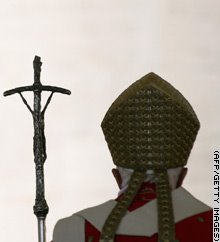
I found this picture on CNN today and just thought that it captures a lot about the Pope in its simplicity.
-Harrison
Studying
So, the exam I'm fearing the most is on Tuesday. Thankfully, my next exam is not until April 21st, so after that exam I can take a bit of a rest and concentrate on Holy Week.
This class is Philosophy of Truth, perhaps THE most frustrating class I have ever taken. I have never seen so many people dispute the meaning of truth, and to see that some even deny its value! I definitely take to the medievalist point of view which is a correspondence theory of truth. A correspondence theory of truth states that for that which is said, there is a corresponding reality. If there is no corresponding reality, that is, thing or state of affairs, then it's false, but if it does have a corresponding thing or state of affairs, then it is true. It can get more complicated, but that's the jist of it. Ockham has some pretty cool stuff to say.
Anyways, so we have the exam on Tuesday. It's worth 30%. I didn't do so well on the first one unfortunately, but I'm feeling a lot more confident with this one. I've been typing up notes all day, explaining concepts as I read them in my own words. My teacher also posted his notes, which is very helpful for guiding me, so that if I don't understand something, I refer to his notes, which are brief, but they give me the starting point for figuring it out. By typing out these notes, it's really sticking in my head. It's an open book test, so I figure if I have everything summarized in one big hunk of notes, it should make it an easy test. But it's actually all making sense finally. It took me all semester, but it's actually a bit enjoyable now, simply because I can enjoy it and thus construct working arguments against a lot of these guys, especially the ones who deny the value of truth.
That is all, just thought I'd share. Please pray for me during the exam period :).
-Harrison
This class is Philosophy of Truth, perhaps THE most frustrating class I have ever taken. I have never seen so many people dispute the meaning of truth, and to see that some even deny its value! I definitely take to the medievalist point of view which is a correspondence theory of truth. A correspondence theory of truth states that for that which is said, there is a corresponding reality. If there is no corresponding reality, that is, thing or state of affairs, then it's false, but if it does have a corresponding thing or state of affairs, then it is true. It can get more complicated, but that's the jist of it. Ockham has some pretty cool stuff to say.
Anyways, so we have the exam on Tuesday. It's worth 30%. I didn't do so well on the first one unfortunately, but I'm feeling a lot more confident with this one. I've been typing up notes all day, explaining concepts as I read them in my own words. My teacher also posted his notes, which is very helpful for guiding me, so that if I don't understand something, I refer to his notes, which are brief, but they give me the starting point for figuring it out. By typing out these notes, it's really sticking in my head. It's an open book test, so I figure if I have everything summarized in one big hunk of notes, it should make it an easy test. But it's actually all making sense finally. It took me all semester, but it's actually a bit enjoyable now, simply because I can enjoy it and thus construct working arguments against a lot of these guys, especially the ones who deny the value of truth.
That is all, just thought I'd share. Please pray for me during the exam period :).
-Harrison
Deus Caritas Est - Introduction to Part II
*note, this is a short post simply because of the proper division of topics*
St Augustine states that “if you see charity, you see the Trinity”. The reason behind this is the Spirit which dwells within us, which Christ gave up on the Cross for the sake of the Church. It is the Holy Spirit that unifies our heart with the heart of Christ, thus moving us towards a love of neighbour in the manner that Christ loves, in a self-giving and selfless way.
It is the same Holy Spirit that transforms the community of the Church to be a witness to the love of God. In fact, that is the role of the Church in its fullest sense, to make the love of God visible for the whole world to see. We make this love known in many ways.
It is in service that charity, caritas, a Latin term denoting a certain type of love, that envelopes the whole of the Church's activity of making the love of God present to all. It is these activities which are the outward expression of the inner experience of the overflowing love of God.
-Harrison
St Augustine states that “if you see charity, you see the Trinity”. The reason behind this is the Spirit which dwells within us, which Christ gave up on the Cross for the sake of the Church. It is the Holy Spirit that unifies our heart with the heart of Christ, thus moving us towards a love of neighbour in the manner that Christ loves, in a self-giving and selfless way.
It is the same Holy Spirit that transforms the community of the Church to be a witness to the love of God. In fact, that is the role of the Church in its fullest sense, to make the love of God visible for the whole world to see. We make this love known in many ways.
It is in service that charity, caritas, a Latin term denoting a certain type of love, that envelopes the whole of the Church's activity of making the love of God present to all. It is these activities which are the outward expression of the inner experience of the overflowing love of God.
-Harrison
Saturday, April 08, 2006
Deus Caritas Est - Overflowing Love
This brings us to the last aspect of part 1, the interrelation of the love of God and the love of neighbour. The Pope states that there are two questions to answer with regards to this:
Can we love God without seeing Him?
Can love be commanded? (Quick clarification, I believe that "command" is being used in the sense of the choice of the individual, that a person commands their own willingness to love)
Response to the first question: God is not totally invisible to us. Indeed, the Second Vatican Council said that Christ is really present to us in five ways at the Mass alone; in the congregation, when it gathers for prayer, in the word of God when it is proclaimed, in the priests, when they preside at the liturgy, in the sacraments, when they are administered, and finally, in the Host and Chalice offered at Mass. Furthermore, we must remember, God loved us first, and this love is made visible to us in Christ. Through the incarnation, Christ is made present to us not only in the Mass, but in our entire lives. He is made present through the activities of the Church, He is made present in the poor, in the homeless, the hungry, the thirsty, the imprisoned. Indeed, God is ever present to us in an ever new and dynamic way. We encounter God in an intimately personal way each day, through our own actions and the actions and needs of others. Thus, God's love is not distant and far off, but it is a dynamic experience, it is something that we encounter, and something that is ever unfolding in our lives. Because God loves us first, we can now respond to that love as it wells up within us. We are not forced to love, but we want to love
Love, therefore, is not a sentiment, it is not a feeling. Those come and go and change like the wind. If love is a purification of man in his entirety, as spoken of already, then love must engage man entirely, and not depend on his emotions simply, though they can express the reality of love, but only for a brief moment, and thus the incompleteness of feelings with regards to love. If love involves the whole self, then it must be an act of the will, the intellect, and the sentiments. Only all three together, which are attributed to man in his fullness, can man make a truly loving act. It is the will, however, which begins this act of love. We need a will to make an act, thus the willingness to say “yes” to God is our act, which encompasses the will, intellect, and sentiments. We must make that initial yes to God in order to respond to the love he outpours to us. Once we receive God's gift of love by responding with a complete yes that involves our entire self, we are abile to begin the life long, open-ended process of the exchange of love between God and ourselves. It is thus through this love that the love of neighbour comes about as a natural result of our love for God. If we love God, we will love our neighbour, in whom Christ is present. If we love God, we will love the beauty of His creation and give it the respect that is due to its dignity. Because all men and women are created in the image and likeness of God, there is thus a dignity there that is due our love. This is all a result of the overflowing of love. A loving communion brings about an overflowing of love.
The most concrete example of the effect of the overflowing love that is a result of the communion between man and God is indeed our loving our neighbour. It is the result of the communion between you and God. This love is made known to us in many ways, and one of them is through the charitable activity of the Church, which is the focus of the second part of the encyclical.
-Harrison
Can we love God without seeing Him?
Can love be commanded? (Quick clarification, I believe that "command" is being used in the sense of the choice of the individual, that a person commands their own willingness to love)
Response to the first question: God is not totally invisible to us. Indeed, the Second Vatican Council said that Christ is really present to us in five ways at the Mass alone; in the congregation, when it gathers for prayer, in the word of God when it is proclaimed, in the priests, when they preside at the liturgy, in the sacraments, when they are administered, and finally, in the Host and Chalice offered at Mass. Furthermore, we must remember, God loved us first, and this love is made visible to us in Christ. Through the incarnation, Christ is made present to us not only in the Mass, but in our entire lives. He is made present through the activities of the Church, He is made present in the poor, in the homeless, the hungry, the thirsty, the imprisoned. Indeed, God is ever present to us in an ever new and dynamic way. We encounter God in an intimately personal way each day, through our own actions and the actions and needs of others. Thus, God's love is not distant and far off, but it is a dynamic experience, it is something that we encounter, and something that is ever unfolding in our lives. Because God loves us first, we can now respond to that love as it wells up within us. We are not forced to love, but we want to love
Love, therefore, is not a sentiment, it is not a feeling. Those come and go and change like the wind. If love is a purification of man in his entirety, as spoken of already, then love must engage man entirely, and not depend on his emotions simply, though they can express the reality of love, but only for a brief moment, and thus the incompleteness of feelings with regards to love. If love involves the whole self, then it must be an act of the will, the intellect, and the sentiments. Only all three together, which are attributed to man in his fullness, can man make a truly loving act. It is the will, however, which begins this act of love. We need a will to make an act, thus the willingness to say “yes” to God is our act, which encompasses the will, intellect, and sentiments. We must make that initial yes to God in order to respond to the love he outpours to us. Once we receive God's gift of love by responding with a complete yes that involves our entire self, we are abile to begin the life long, open-ended process of the exchange of love between God and ourselves. It is thus through this love that the love of neighbour comes about as a natural result of our love for God. If we love God, we will love our neighbour, in whom Christ is present. If we love God, we will love the beauty of His creation and give it the respect that is due to its dignity. Because all men and women are created in the image and likeness of God, there is thus a dignity there that is due our love. This is all a result of the overflowing of love. A loving communion brings about an overflowing of love.
The most concrete example of the effect of the overflowing love that is a result of the communion between man and God is indeed our loving our neighbour. It is the result of the communion between you and God. This love is made known to us in many ways, and one of them is through the charitable activity of the Church, which is the focus of the second part of the encyclical.
-Harrison
Subscribe to:
Posts (Atom)

